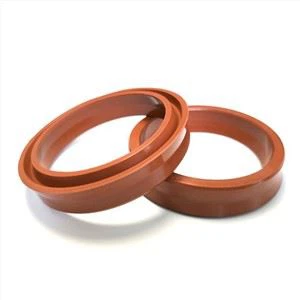

Measuring an O-ring accurately is crucial for ensuring a proper fit and optimal performance in various applications. As an O-ring supplier, I understand the significance of providing accurate measurements to our customers. In this blog post, I will guide you through the process of measuring an O-ring, including the tools needed, the key dimensions to measure, and some tips to ensure precise measurements.
Tools Required for Measuring O-Rings
Before we start measuring, it's essential to gather the right tools. Here are some common tools you'll need:


- Calipers: A good set of calipers, either digital or mechanical, is the most important tool for measuring O-rings. Digital calipers offer greater accuracy and are easier to read, but mechanical calipers can also get the job done.
- Microscope or Magnifying Glass: For smaller O-rings, a microscope or magnifying glass can help you see the details more clearly and ensure accurate measurements.
- Flat Surface: A flat and clean surface is necessary to place the O-ring on during measurement to prevent distortion.
Key Dimensions to Measure
There are two main dimensions to measure when it comes to O-rings: the inner diameter (ID), the outer diameter (OD), and the cross-sectional diameter (CS).
- Inner Diameter (ID): The ID of an O-ring is the measurement of the hole in the center of the ring. It's important to measure the ID accurately because it determines how well the O-ring will fit around a shaft or inside a bore.
- Outer Diameter (OD): The OD is the measurement of the outside edge of the O-ring. This dimension is important when the O-ring needs to fit into a groove or a housing.
- Cross-Sectional Diameter (CS): The CS is the measurement of the thickness of the O-ring. It's a critical dimension as it affects the sealing performance and the amount of compression the O-ring can withstand.
Step-by-Step Guide to Measuring an O-Ring
Now that you have the necessary tools and understand the key dimensions, let's go through the step-by-step process of measuring an O-ring.
Step 1: Prepare the O-Ring
Place the O-ring on a flat and clean surface. Make sure the O-ring is not distorted or stretched. If the O-ring is dirty, clean it gently with a mild solvent and let it dry completely before measuring.
Step 2: Measure the Inner Diameter (ID)
Open the calipers and place the jaws inside the O-ring. Gently close the calipers until they touch the inner surface of the O-ring on opposite sides. Make sure the calipers are perpendicular to the O-ring's axis. Read the measurement on the caliper display. Take multiple measurements at different points around the O-ring to ensure accuracy. If there are slight variations in the measurements, take the average.
Step 3: Measure the Outer Diameter (OD)
Open the calipers wider and place the jaws outside the O-ring. Gently close the calipers until they touch the outer surface of the O-ring on opposite sides. Again, make sure the calipers are perpendicular to the O-ring's axis. Read the measurement on the caliper display. Take multiple measurements at different points around the O-ring and calculate the average.
Step 4: Measure the Cross-Sectional Diameter (CS)
To measure the CS, carefully cut a small section of the O-ring using a sharp blade. Make sure the cut is clean and perpendicular to the O-ring's axis. Place the cut section on a flat surface and use the calipers to measure the thickness of the O-ring at the cut. Take multiple measurements along the cut section and calculate the average.
Tips for Accurate Measurement
- Handle with Care: O-rings are delicate and can be easily distorted. Always handle them gently to avoid changing their dimensions.
- Use the Right Tools: Make sure your calipers are in good condition and calibrated correctly. If possible, use a high-quality digital caliper for more accurate measurements.
- Measure at Multiple Points: To account for any variations in the O-ring's shape, take multiple measurements at different points around the ring and calculate the average.
- Check for Wear and Tear: If the O-ring is worn or damaged, it may not have the standard dimensions. In this case, it's best to replace the O-ring with a new one and measure the new one.
Common O-Ring Materials and Their Applications
At our company, we offer a wide range of O-ring materials to meet different application requirements. Here are some common O-ring materials and their applications:
- Metric Nitrile Rubber O Rings: Nitrile rubber, also known as NBR, is a popular choice for O-rings due to its excellent resistance to oil, fuel, and other petroleum-based fluids. Metric Nitrile Rubber O Rings are commonly used in automotive, industrial, and hydraulic applications.
- Fep Silicone Encapsulated O Rings: FEP silicone encapsulated O-rings combine the chemical resistance of FEP (fluorinated ethylene propylene) with the flexibility and sealing properties of silicone. Fep Silicone Encapsulated O Rings are ideal for applications where high chemical resistance and low friction are required, such as in the semiconductor and pharmaceutical industries.
- Anti Friction FEP Encapsulated Silicone O-ring: These O-rings are specifically designed to reduce friction and wear, making them suitable for applications where smooth movement is essential. Anti Friction FEP Encapsulated Silicone O-ring are commonly used in valves, pumps, and other mechanical devices.
- FKM NBR EPDM China Rubber O Ring: FKM (fluoroelastomer), NBR, and EPDM (ethylene propylene diene monomer) are three different types of rubber materials with unique properties. FKM NBR EPDM China Rubber O Ring offer a wide range of chemical resistance, temperature tolerance, and sealing performance, making them suitable for various industrial applications.
- Heat-resistant Colored Silicone Rubber O-ring: Silicone rubber O-rings are known for their excellent heat resistance, flexibility, and electrical insulation properties. Heat-resistant Colored Silicone Rubber O-ring are available in different colors, which can be used for identification purposes or to match the aesthetic requirements of the application.
Importance of Accurate Measurement in O-Ring Selection
Accurate measurement is crucial when selecting the right O-ring for your application. Using an O-ring with incorrect dimensions can lead to poor sealing performance, leaks, and premature failure. Here are some reasons why accurate measurement is important:
- Proper Fit: An O-ring that fits correctly will create a tight seal, preventing leaks and ensuring the efficient operation of the system.
- Optimal Compression: The right amount of compression is necessary for the O-ring to seal effectively. If the O-ring is too large or too small, it may not be compressed enough or may be over-compressed, leading to poor sealing.
- Compatibility: Different applications require different O-ring materials. Accurate measurement helps you choose the right material based on the operating conditions, such as temperature, pressure, and chemical exposure.
Conclusion
Measuring an O-ring accurately is essential for ensuring a proper fit and optimal performance in various applications. By following the steps outlined in this blog post and using the right tools, you can measure an O-ring with confidence. As an O-ring supplier, we are committed to providing high-quality O-rings and accurate measurements to our customers. If you have any questions or need further assistance with O-ring measurement or selection, please don't hesitate to contact us. We look forward to helping you find the perfect O-ring for your application.
References
- "O-Ring Handbook," Parker Hannifin Corporation.
- "Fundamentals of Sealing Technology," John W. Ferron.
- Various technical documentation from O-ring manufacturers.