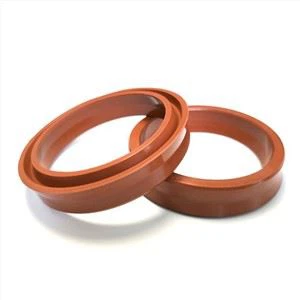

Hey there! I'm a supplier of V Pack Seals, and today I wanna chat about how the thermal expansion coefficient can have a big impact on the performance of these seals.
First off, let me give you a quick rundown on what V Pack Seals are. They're a type of sealing device used in a whole bunch of industrial applications, especially in hydraulic systems. Their job is to prevent the leakage of fluids, like oil or water, between moving parts. You know, stuff like pistons and cylinders.
Now, the thermal expansion coefficient – that's a measure of how much a material expands or contracts when its temperature changes. Every material has its own unique thermal expansion coefficient, and this can vary depending on things like the material's composition and the temperature range it's exposed to.
When it comes to V Pack Seals, the thermal expansion coefficient matters a whole lot. Here's why.
Effect on Sealing Performance
One of the most important aspects of a V Pack Seal is its ability to create a tight seal. If the seal isn't tight, well, you're gonna have fluid leakage, and that can lead to all sorts of problems.
Let's say the temperature of the system where the V Pack Seal is installed goes up. If the material of the seal has a high thermal expansion coefficient, it'll expand a lot. This might seem like a good thing at first, as it could potentially make the seal tighter. But too much expansion can cause the seal to deform. It might start to bulge or even get squeezed out of its intended place. This, in turn, can lead to uneven sealing pressure, and ultimately, leakage.
On the flip side, if the temperature drops, a material with a high thermal expansion coefficient will contract significantly. This contraction can cause gaps to form between the seal and the surfaces it's supposed to seal against. Again, leakage is the result.
On the other hand, if the thermal expansion coefficient of the seal material is too low, it may not expand or contract enough to adapt to temperature changes. For example, in a high - temperature environment, it won't expand to fill any small gaps that might open up due to thermal expansion of the surrounding components. So, it also fails to maintain a proper seal.
Impact on Durability
The thermal expansion coefficient also affects the durability of V Pack Seals. When a seal is constantly expanding and contracting due to temperature fluctuations, it experiences stress. This stress can cause the material to fatigue over time.
Materials with extreme thermal expansion coefficients are more prone to this kind of fatigue. If the expansion and contraction are too large, the seal might crack or break. This reduces its lifespan and means you'll have to replace it more often, which is a hassle and can be costly.
Material Selection
Choosing the right material for V Pack Seals is crucial, and the thermal expansion coefficient is a key factor in this decision - making process.
For applications where the temperature is relatively stable, a wider range of materials can be considered. But in environments with significant temperature variations, you need to be more careful.


For low - temperature applications, materials with a lower thermal expansion coefficient are often preferred. They won't contract too much and cause gaps. In high - temperature scenarios, you need something that can expand moderately without deforming too much.
Some common materials used for V Pack Seals and their thermal expansion coefficients:
- Rubber: Rubbers generally have a relatively high thermal expansion coefficient. Natural rubber can expand quite a bit when heated, which makes it suitable for some applications with moderate temperature changes but may not be ideal for extreme conditions.
- Polyurethane: Polyurethane seals have a more moderate thermal expansion coefficient compared to rubber. This makes them a popular choice for many industrial applications, especially those with a certain range of temperature variations. You can check out our Polyurethane Hydraulic Cylinder Oil Sealing Ring to see an example of a high - quality polyurethane seal.
Specific Application Scenarios
Let's take a look at a few real - world applications to see how the thermal expansion coefficient affects V Pack Seals.
Hydraulic Systems in Construction Equipment
Construction equipment often operates in different environmental temperatures. In cold winter conditions, the V Pack Seals in the hydraulic cylinders of excavators or bulldozers need to maintain their sealing performance. If the seal material has a high thermal expansion coefficient, it may contract so much that the hydraulic fluid starts to leak. This can lead to reduced efficiency of the equipment or even safety hazards.
On the other hand, during hot summer days, the same seals may expand too much. If they're not designed properly, they can jam the moving parts or cause damage to the cylinder walls. That's why we carefully select materials with appropriate thermal expansion coefficients for our V Pack Seals used in construction equipment.
Automotive Industry
In cars, V Pack Seals are used in various places, such as the engine and transmission systems. These environments experience significant temperature changes during operation. In the engine, the temperature can reach very high levels. A V Pack Seal with the wrong thermal expansion coefficient can either expand too much and cause over - stress on the surrounding components or fail to expand enough and lead to oil leakage.
We offer a variety of seals suitable for automotive applications. For example, our Pu Wiper Seal Hydraulic V Rod Piston Seal is designed to handle the temperature variations in automotive hydraulic systems.
Compatibility with Other Components
It's not just about the seal itself. The thermal expansion coefficient also needs to be compatible with the other components in the system.
For instance, if the V Pack Seal is installed in a metal cylinder, and the metal has a different thermal expansion coefficient than the seal material, problems can arise. When the temperature changes, the metal and the seal will expand or contract at different rates. This can create uneven forces on the seal, leading to premature wear or failure.
So, when we design and manufacture our V Pack Seals, we take into account the thermal properties of the surrounding components to ensure proper compatibility.
Our Product Range
We've got a wide range of V Pack Seals and other related products to meet different needs. Besides the ones I've already mentioned, we also have OEM Silicone Red Colour Pu Bushing, Standard And Custom Size Dustproof Wiper Seal, and Brown FKM ODU Hydraulic Oil Seal. These products are all made with high - quality materials and designed to perform well in different temperature conditions.
Contact Us for Procurement
If you're in the market for V Pack Seals or any of our other products, don't hesitate to get in touch with us. We're here to help you find the right seals for your specific application. Whether you need standard sizes or custom - made products, we've got you covered.
References:
- Some textbooks on material science that cover thermal properties of materials.
- Industry reports on the performance of seals in different applications.