

SWKS Seal, with over 10 years experience, is one of the leading custom silicone rubber electrical connector seal manufacturers and suppliers in China. And we also offer the customized service catering to your special requirement. Please be free to buy the rubber products with competitive price from us.
Custom Silicone Rubber Electrical Connector Seal
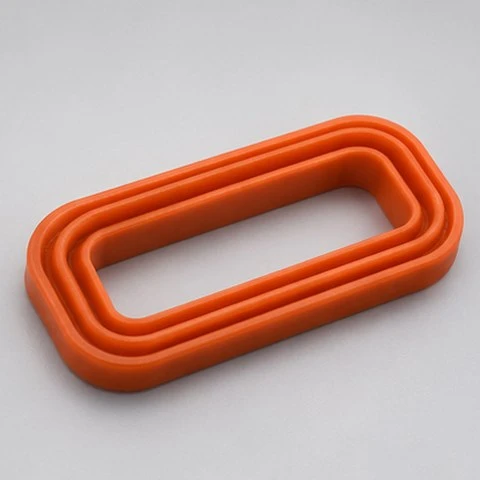
This silicone rubber electrical connector seal is a drawing-based component for industrial electrical connector assemblies. A representative configuration uses a molded perimeter seal located between mating connector housings. The molded geometry, mounting interface and material specification are reviewed together so the part can be evaluated in the equipment where it will be used.
The seal fits between connector housing halves and compresses as the latch or fastener closes. An oblong profile can follow a keyed housing while leaving room for the terminal field. Specify how the groove captures the seal before mating and which surfaces are allowed to carry mold witness marks.
Application and installation
Confirm whether the seal is installed by the connector assembler or retained by the housing supplier. A thin wall can be pulled out of position if it is handled with an unsuitable tool. Include the connector shell tolerances, latch engagement and any visible identification marks that help poka-yoke assembly.
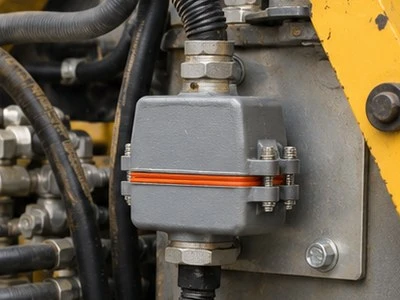 Equipment installation view |
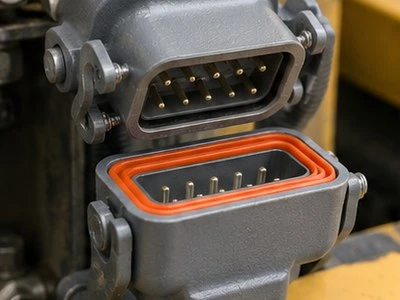 Detail of the installed component |
The application views show a typical installation arrangement. Use the assembly drawing to define actual dimensions, the surrounding hardware and the order in which the parts are assembled. Where the part sits against more than one surface, identify which surface locates it, which carries load and which must remain clear throughout installation or operation.
Specifications for a custom order
| Item | Drawing or project input |
|---|---|
| Material | Silicone rubber (VMQ) |
| Processing | Silicone rubber molding |
| Application | industrial electrical connector assemblies |
| Geometry | housing groove width and depth, rib height and wall thickness, keying and orientation, available mating travel |
| Operating inputs | connector mating sequence, exposure and cleaning, target ingress and service repetition |
| Drawing format | STP, STEP, IGS or PDF with revision and units |
| Acceptance | Critical drawing features, assembly fit and agreed functional checks |
Geometry and assembly interfaces
Mark housing groove width and depth and rib height and wall thickness on the same drawing, with an orientation that matches the assembly. For keying and orientation, call out which edges or surfaces can be used for inspection. Define available mating travel in the condition that matters for fit, and state whether that check applies before assembly or after the part is installed. A section view often makes it easier to confirm where a radius ends and where the functional profile begins.
Material and operating environment
The suggested construction is Silicone rubber (VMQ). Include connector mating sequence, exposure and cleaning, and target ingress and service repetition in the request. Exact grade and hardness should be established from the functional requirements and the inspection conditions. Where the specifications name a grade, provide the grade or compound reference and confirm whether an alternate can be submitted for engineering review.
Check the complete mating travel
A peripheral connector seal follows the opening of a connector housing and is compressed as its mate closes. The latching position determines the final spacing. Show the unlatched and latched positions, the hard-stop surfaces and the intended compression at the seal. A connector can appear closed on one end while a terminal, wire or latch limits travel at the other. The inspection fixture should reflect how the shells align before the seal starts to compress.
Determine whether the seal is installed into an open groove or retained behind a step. For a preassembled connector, note the handling, transport and orientation before the shells are joined. Provide a drawing of the exact groove in both straight and curved sections. Small corner radii can affect how the seal sits and where the available gap changes. Show any protrusions or keys that identify which side of the seal faces which housing.
Define the rib and groove as matched features
In addition to the outside perimeter, specify the seal rib shape, its height relative to the body and its location in the groove. A double rib places two contact lines on the mating surface, and their installed shape depends on the cross section and available travel. A corner detail with both shell profiles is valuable for assessing whether one rib might roll or be pinched where the groove turns.
Specify whether the silicone needs a color for visual sorting or a specific compound for an environmental requirement. Send the operating range, cleaning procedures and exposure relevant to the connector. Provide the exact ingress verification method expected for the finished electrical assembly, if any. The seal is one part of that assembly. Cable exits, housing joints and other openings can contribute to the overall ingress result.
Assess closure, seating and evidence of contact
At pilot assembly, observe how the seal is placed into its groove and whether it stays seated during handling. Measure closure force if it matters to the system and watch for seal material being dragged by the mating shell. On teardown, compare the seating pattern on the two ends and in each corner. A mark on the sealing rib can be evaluated against the location of housing joints or surface discontinuities.
Where the connector is opened for service, repeat the intended number of mating operations, then reassess retention, rib condition and the recorded qualification requirement. Compare with a sample that was assembled once and left in place for the stated dwell. Use consistent housing revisions, assembly procedures and environmental conditions so the result can be traced to the seal and the corresponding connector.
Send the gasket geometry together with drawings for the corresponding shell halves and latch. If versions share a family name but differ in groove depth or mating travel, identify the correct design before duplicating a sample or committing to a mold.
Tooling, samples and production approval
A custom project starts with the drawing revision, the proposed process and a review of dimensions relevant to the equipment. Silicone rubber molding is the starting process for this part. The tooling review can identify feasible parting surfaces, locations available for trimming and any features that need a separate operation. Let the supplier know which surfaces need to stay smooth and where handling or tooling marks are permitted.
First-article evaluation
Check gasket seating, housing closure and insertion force on both connector halves. Evaluate ingress resistance at assembly level under the applicable customer test conditions.
Measure the first article before the assembly trial. Record the sample identifier, drawing revision, material reference and the measurement conditions. Perform the trial in representative mating hardware where possible. If testing uses a surrogate fixture, write down the boundary conditions it represents so the test results and later installation results can be compared.
Preparing for repeat orders
State whether the order is for a one-time maintenance replacement, a pilot run or a recurring production program. An annual estimate and typical call-off quantity help the supplier present a sensible tooling and batch plan. If parts feed directly to an assembly line, describe the preferred pack quantity and any part orientation or handling restrictions. Keep the part number and revision on the purchasing record.
Using the application data in the drawing review
Start the engineering discussion with the equipment section showing housing groove width and depth and rib height and wall thickness. Indicate which dimensions come from the mating hardware and which can be adjusted on the molded part. Mark the intended contact zone and explain whether it is already defined by the equipment drawing. This lets the tool review focus on the part features that affect replacement, assembly and service.
Keep a record of how connector mating sequence and exposure and cleaning were established. If the equipment operates in different modes, identify the mode in which the part is most heavily worked and the mode in which it spends the most time. Include target ingress and service repetition in the test instructions. A test that reproduces only one operating state can miss a problem that appears at a transition, after a dwell or during routine cleaning and reassembly.
Document the operating envelope
Write down the values for connector mating sequence at normal operation and the conditions reached during transitions. Use the same equipment configuration for each observation. Define what is monitored in service and which values are measured only when the machine is set up. If there are multiple variants, identify which variants share housing groove width and depth and which need their own drawing references.
When the sample is fitted, photograph rib height and wall thickness in the orientation shown in the specification. A fixture or short installation note can make the check easier to reproduce during a later review. Keep the representative components available for demonstrating keying and orientation and checking whether available mating travel changes after installation. Specify which results need to accompany first production and which test records stay with the approved sample.
Request a quote
Send the latest drawing and share the mating geometry, material or hardness target, working conditions, initial quantity and forecast. If tolerances or standards are still being discussed, identify which features need technical feedback and which requirements are fixed. Tell us whether the project should match an existing assembly or whether surrounding parts can be changed to improve fit.
Please send drawings and project requirements to amanda@tjswks.com for quotation.
Hot Tags: custom silicone rubber electrical connector seal, China, manufacturers, suppliers, customized, price